
Osaka experiences for couples cover a surprising range of moods, from neon-lit food streets where you can share skewers elbow to elbow, to quiet riverside paths perfect for an evening stroll. I have visited Osaka with a partner more than once, and each time the city surprised me with how easily it shifts between chaotic energy and unexpected calm. It is not a city that demands a rigid itinerary; instead, it rewards couples who wander, get a little lost, and let their appetite guide the day.
What makes Osaka particularly good for couples is its scale. Unlike Tokyo, distances between major areas feel manageable, so you spend less time commuting and more time actually being together. The city also has a playful, unpretentious personality. People here are known for being warm and a bit cheeky, and that energy rubs off on visitors. You will find yourselves laughing more, talking to strangers more, and generally feeling looser than in more formal Japanese cities.
This guide is built around real experiences rather than a checklist of landmarks. I will walk through five areas of Osaka life that consistently work well for couples: food culture, nighttime views, historical sites, quieter neighborhood walks, and short day-trip options. My hope is that by the end, you will have a flexible framework rather than a rigid schedule, because the best Osaka moments for couples often happen when you deviate from the plan.
Sharing Osaka’s Legendary Food Culture
Osaka calls itself the nation’s kitchen, and for couples, food becomes less about individual meals and more about a shared adventure. The joy here is in ordering several small dishes and passing them back and forth, tasting things you would never order alone. Street-level food stalls, casual counters, and small restaurants specializing in one dish are everywhere, and much of the fun is simply choosing a lively-looking alley and seeing what you find.
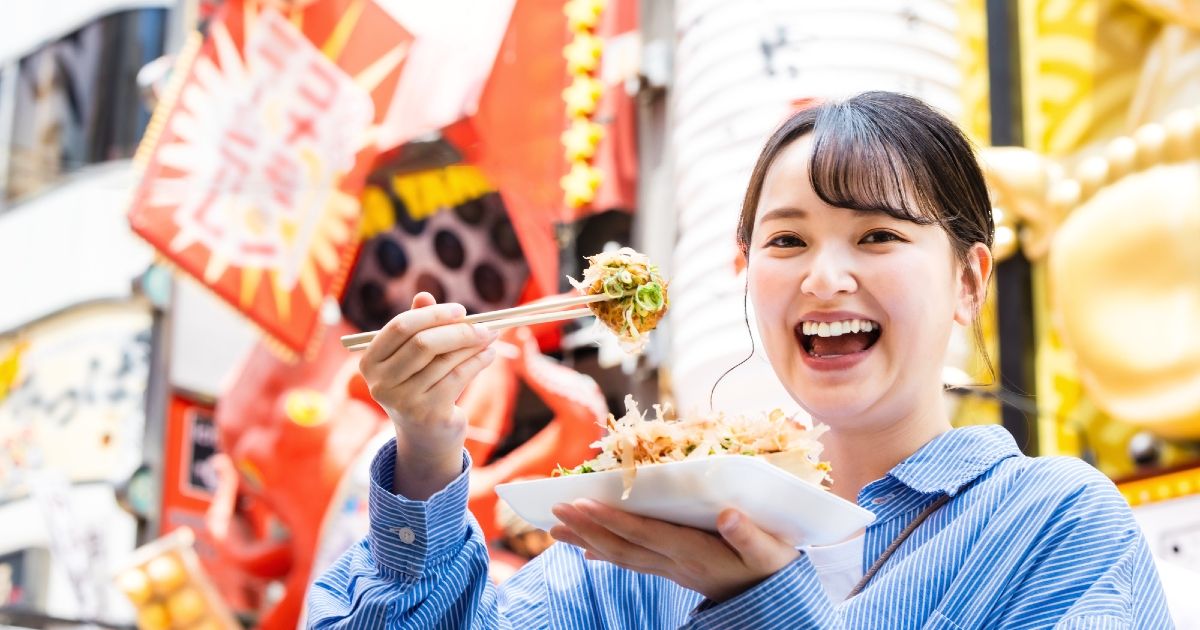
Takoyaki, the octopus-filled batter balls, are almost a rite of passage, but I would encourage couples not to stop there. Okonomiyaki, the savory pancake cooked on a hot griddle, is often prepared right at your table, which turns dinner into a small collaborative project. There is something quietly bonding about watching your food sizzle together, arguing gently over when it is ready to flip, and finally digging in.
The simple act of sharing street food from paper trays, standing shoulder to shoulder in a crowded alley, often becomes the memory couples talk about long after they have forgotten the name of any specific restaurant. This is part of why food-focused neighborhoods work so well for couples travel here; the experience is inherently interactive rather than passive.
For a slightly slower pace, consider seeking out a small izakaya, the casual pub-style restaurants found throughout the city. These spots often have counter seating, which naturally puts you close together, and menus built around small plates meant for sharing. Ordering a few local drinks and grazing through dishes over an hour or two is one of the most relaxed, unglamorous, and genuinely romantic things you can do in Osaka.
Do not be afraid of language barriers in food settings. Many stalls and small restaurants have picture menus, and pointing plus smiling goes a long way. Some of my favorite meals happened because we simply gestured at what the couple next to us was eating.
Evening Views and the City’s Nighttime Energy
Osaka transforms after dark, and this shift is where a lot of the city’s romantic potential lives. The famous canal-side district glows with signage reflected on the water, and simply walking along the water’s edge in the evening, without any particular destination, is one of the most atmospheric things couples can do here. The crowds add energy rather than stress, since everyone around you seems to be in a similarly good mood.
Observation decks and rooftop viewpoints scattered around the city offer a different kind of romance, one built on quiet and distance rather than immersion. Watching the skyline spread out below, with the couple silhouettes of other visitors doing the same thing nearby, has a calming, almost cinematic quality. I remember standing at one such viewpoint in near silence with my partner, both of us simply watching trains crawl through the grid of lights below.
There is a particular kind of intimacy that happens when two people stop talking and just watch a city glow together, and Osaka’s nightscape is built for exactly that kind of shared, wordless moment. You do not need a special occasion to justify seeking this out; an ordinary Tuesday night works just as well as a planned anniversary trip.
Boat rides along the river are another popular option in the evening, offering a slower, water-level perspective of the same illuminated buildings you might have seen from a bridge or sidewalk. The gentle rocking motion combined with the lights reflecting on the water creates a naturally slow, conversational pace that suits couples looking for something calmer than the crowds on land.
If you prefer people-watching to postcard views, simply choosing a bench near a busy crossing or plaza after dark can be entertaining in its own right. Osaka’s nightlife has a theatrical quality, with street performers, illuminated signage, and a constant hum of activity that makes doing nothing feel oddly eventful.
Castle Grounds and Layers of History
Osaka Castle and its surrounding park offer a different pace entirely, and pairing a food-and-neon day with a slower historical afternoon creates a nice rhythm for a multi-day trip. The castle itself, rebuilt in the twentieth century after wartime destruction, sits within a large park with wide paths, moats, and seasonal greenery that make for an easy, unhurried walk.
Couples often underestimate how much simply walking through the castle grounds, rather than rushing to the interior museum, can offer. The moat walls, the stone foundations, and the layered history of a structure destroyed and rebuilt multiple times give the space a certain gravity. Sitting on a bench near the moat, watching the castle catch the afternoon light, is a quiet way to spend an hour together without needing much conversation.
Visiting during a seasonal peak, when blossoms or autumn color frame the castle’s stone walls, turns an already scenic spot into something couples frequently describe as one of the most photogenic moments of their entire trip. Even outside those peak weeks, though, the grounds remain pleasant and far less crowded, which some couples actually prefer.
The park surrounding the castle also has open lawns where locals picnic, jog, or simply sit with friends, giving the area a lived-in, unpretentious feel rather than a purely touristic one. Bringing a simple snack and finding a patch of grass to sit on together is a low-cost, low-effort way to slow down the pace of a busy trip.
History-minded couples might also appreciate learning about the castle’s role in unifying Japan centuries ago, since the surrounding museum exhibits give context to why this particular structure carries so much symbolic weight in the city’s identity. Even a brief visit adds depth to photos taken later, since you will understand what you are actually looking at.
Quieter Neighborhood Walks Away from the Crowds
While Osaka’s famous districts get most of the attention, some of the most memorable couple moments I have had here came from wandering into quieter residential neighborhoods with no particular plan. Narrow lanes lined with small shops, old wooden houses, and neighborhood shrines offer a version of the city that feels more intimate and less performative than the main tourist strips.
These walks are less about seeing a specific sight and more about noticing details together: a cat sleeping on a warm doorstep, a tiny shrine tucked between buildings, the smell of grilling fish drifting from an open kitchen window. Couples who enjoy slow travel tend to find this kind of unstructured wandering more satisfying than checking off major attractions.
Some of the best conversations I have had while traveling happened while wandering a quiet backstreet with no destination in mind, simply because the absence of a plan left room for actual talking instead of navigating. If your relationship thrives on unhurried conversation, building at least one unplanned afternoon into your Osaka itinerary is worth the trade-off in efficiency.
Local cafes tucked into these quieter streets often make excellent rest stops. Many are small, family-run spaces with just a handful of seats, giving you a cozy, low-key setting to recharge between longer walks. Sharing a slice of cake or a pot of tea in one of these small cafes can feel more personal than a stop at a larger, more commercial establishment.
These neighborhood detours also tend to be more budget-friendly, since prices in local shops and cafes are usually lower than in heavily touristed zones. This makes it easier to justify slowing down without feeling like you are wasting valuable trip time or money.
Easy Day Trips for a Change of Scenery
Osaka’s central location in the Kansai region makes it a convenient base for day trips that can add variety to a couple’s itinerary without requiring a change of hotel. Nearby cities offer everything from historic temples and shrines to scenic parks, and the train connections from Osaka are generally fast and straightforward, which reduces travel stress considerably.
A day spent wandering temple grounds or old preserved streets in a nearby historic city can feel like a completely different trip layered into your Osaka stay. The slower pace and older architecture provide a nice contrast to Osaka’s modern energy, and couples often find that alternating between the two paces keeps the whole trip feeling fresh rather than repetitive.
Building in just one day trip during a longer Osaka stay gives couples a sense of contrast that makes returning to the city’s energetic streets feel exciting again rather than routine. This is especially useful on longer trips of five days or more, when city fatigue can start to set in.
Coastal or mountain-adjacent day trips are also worth considering if you and your partner enjoy nature. A short train ride can take you from dense urban streets to hillside paths or waterside views, offering a reset before diving back into Osaka’s busier districts. Packing a light lunch to eat somewhere scenic adds a simple, low-cost romantic touch to these outings.
As with everything else in this guide, the goal is not to maximize the number of places visited but to create variety and breathing room. A well-timed day trip can make the rest of your Osaka stay feel more vivid by comparison.
Summary
Osaka rewards couples who mix structured sightseeing with unplanned wandering. Food culture offers built-in opportunities for sharing and collaboration, nighttime views provide quiet, wordless bonding moments, and the castle grounds add a slower historical rhythm to the trip. Quiet neighborhood walks and the occasional day trip round out an itinerary that balances energy with calm. None of these experiences require significant planning or expense; they simply require a willingness to slow down and pay attention to each other as much as to the city itself.
FAQ
How many days should couples spend in Osaka?
Three to four days is generally enough to enjoy Osaka’s main food districts, castle grounds, and at least one relaxed neighborhood walk without feeling rushed. Adding a day trip works well if you have five days or more.
Is Osaka a romantic city compared to other Japanese destinations?
Osaka’s romance comes from its energy and shared experiences rather than classic scenery alone. Its food culture, nighttime views, and easygoing local atmosphere make it especially good for couples who enjoy interactive, casual experiences over formal sightseeing.
What is the best time of year for couples to visit Osaka?
Spring and autumn are popular for their mild weather and seasonal scenery around the castle grounds. Summer brings festival energy but higher humidity, while winter offers fewer crowds and crisp, clear evenings for nighttime walks.
Do couples need to plan every activity in advance?
Not necessarily. Osaka is well suited to spontaneous wandering, especially around food districts and quieter neighborhoods. Planning one or two anchor activities per day while leaving room for unplanned exploration often works best.
Looking back on my own trips to Osaka, the moments that stand out are rarely the ones I planned most carefully. They tend to be small, unscripted things: sharing a snack on a random street corner, sitting quietly near the castle moat, or simply talking while wandering a backstreet neither of us had researched beforehand.
If you are building an itinerary for Osaka experiences for couples, my honest advice is to plan loosely and leave room for detours. The city’s layout and friendly atmosphere make it forgiving for spontaneous decisions, and some of the best discoveries come from simply following your curiosity together.
Whatever mix of food, views, history, and quiet streets you choose, Osaka has a way of making couples feel like they stumbled onto something special, even when they are standing in the middle of a crowd. That blend of energy and intimacy is what keeps so many travelers, myself included, coming back.